
LEAVING EMPTIED
On the Legacy of Innocent Chukwuemeka Chukwuma (1966–2021)

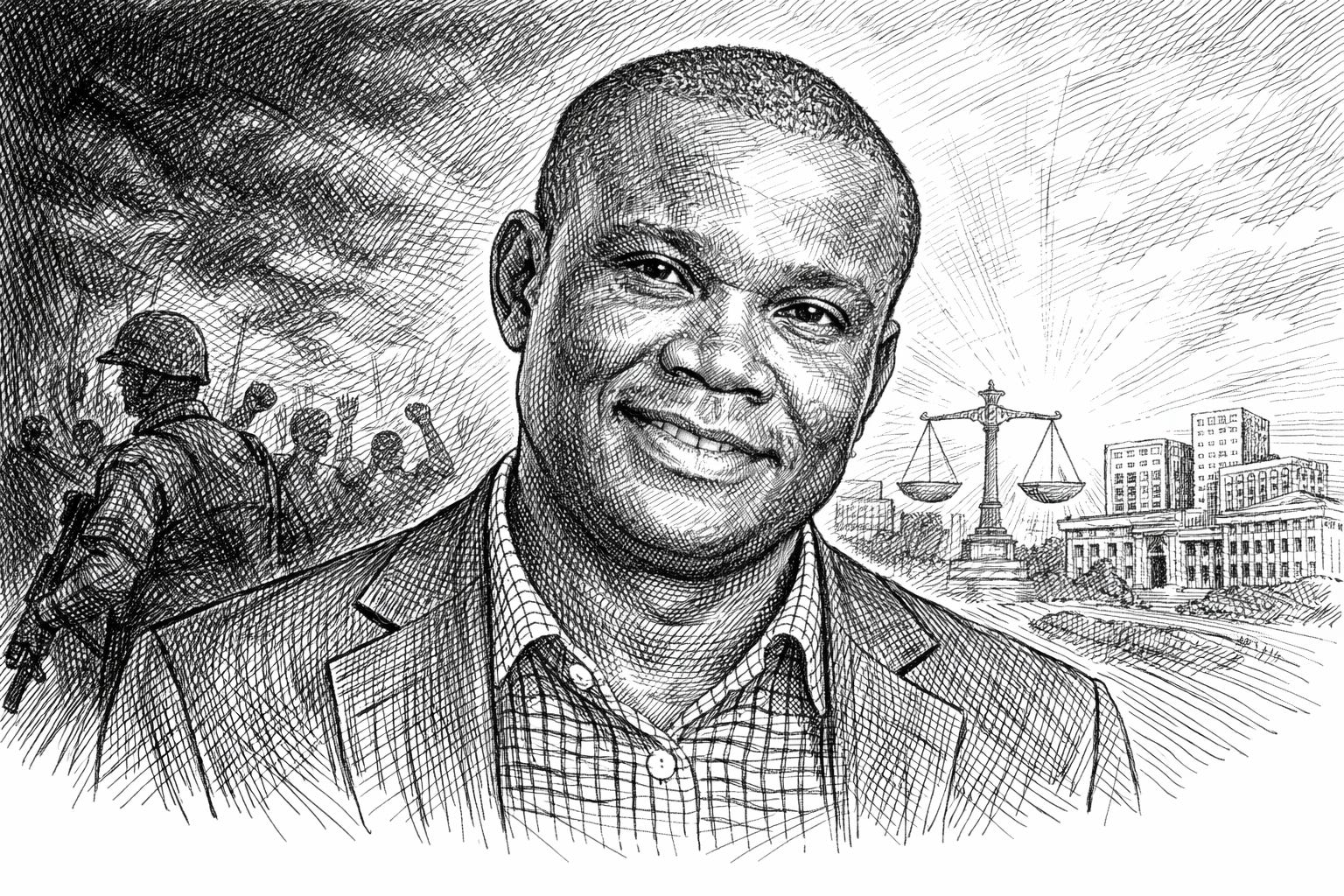
I arrived at the beautiful campus of the University of Nigeria, Nsukka (UNN), in September 1990, angry. Who wouldn’t be? Nigeria had failed the generation before mine and seemed determined to do the same to mine. Even as we took in the air of the campus, there was already the sense of a gloomy future. The military had their leprous fingers on all the levers and their jackboots on our necks. Joining the Students’ Union Government was a natural choice, and I was down for whatever was required.
Those were the days when activism was practised on the streets, not from the protective cover of a phone screen. The khaki boys, with their little sense of humour, portended real risks. The students—with brains infused with Fanon’s sermons—were not in the mood for laughs. Youthful exuberance and a sense of invincibility took care of the butterflies. But what gave our wings real lift were the stories of those who had walked those same grounds.
UNN had its share of heroes. In my era, three names stood out: Olu Oguibe, Chima Ubani, and Innocent Chukwuma. They were only a few years ahead of us, but their exploits were already legendary. Their names did more than inspire. They steadied our nerves. Their stories asserted that our resistance had a rich lineage, and that even in a season of national asphyxiation, ordinary mortals could still steel their backs and strive “to restore the dignity of man.” In the mind of a 17-year-old, that mattered more than you may be able to imagine. Their myth formed a kind of protective blanket under which we could carry on the struggle, assured of victory: Aluta Continua, Victoria Ascerta.
But with age comes a clearer understanding of what makes some lives matter more than others. It was not simply that they resisted or put themselves in harm’s way for others. Many resisted. It was that the best among them found a way to convert anger into a disciplined public purpose. They moved from outrage to institution-building. They understood that protest may shake the barricades, but it is institutions that keep the doors open to all. That, to my mind, is what made Innocent Chukwuemeka Chukwuma such a consequential figure.
Earlier today, a few of us gathered at the Centre for Memories in Enugu to honour his memory at the 2026 Innocent Chukwuemeka Chukwuma Memorial Lecture. It was a fitting venue. In 2017, when a few of us came together to start the Centre, Innocent—then the West Africa Head of the Ford Foundation—gave both moral and financial support to the idea. That was typical of him. He did not merely applaud good ideas from afar; he leaned into them. He recognised that memory, like citizenship, needs institutions if it is to endure and play its role in development.
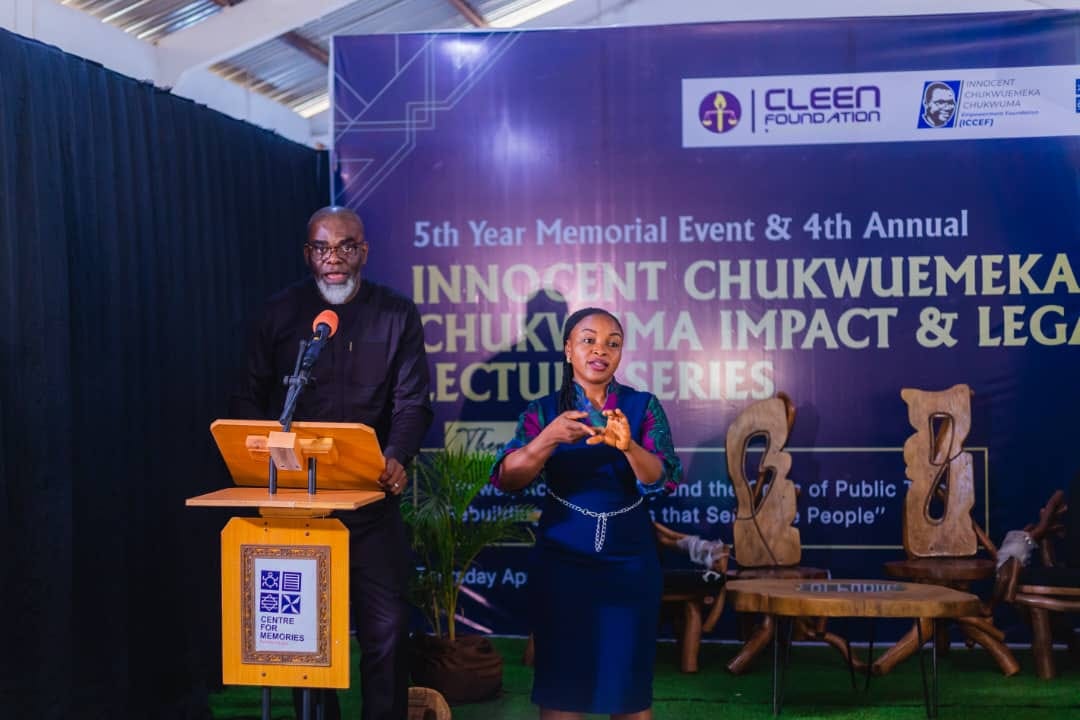
Innocent belonged to that generation of Nigerians who came of age under military rule but refused to adjust to life under oppression. He emerged from student activism into the fight for human rights. He rose to national prominence, first through the Civil Liberties Organisation, then through the CLEEN Foundation, which became one of the most respected justice-sector institutions on the continent. In a country where armchair analysts dominate, Innocent leaned into practical reforms: policing, access to justice, public safety, democratic accountability. Later, at the Ford Foundation, he widened the scope of his influence across West Africa, remaining consistent to his core. His evolution from an activist into an institution-builder is proof that indignation, properly disciplined, can become architecture.
That is why Innocent’s life deserves more than praise. It deserves study.
Nigeria has never lacked angry young people. What we have lacked are enough people who can refine anger into development craftsmanship—into ideas and organisations that are resilient enough to outlive the moment that produced them. Innocent was one of those rare persons who didn’t just bask in the righteous glow of being able to point out what’s wrong but also build what was necessary.
As the tributes came in today, my mind returned to a line from one of his daughters at his funeral: “Daddy gave his all. He left emptied.” What a tribute. What a way to live. In that one sentence lies an entire philosophy of life. To leave this earth emptied is to have spent oneself on something larger than oneself. It is to refuse the miniature ambition of merely passing through the world intact. It is to insist, instead, on leaving everything in that field. It is to arrive at the mouth of one’s grave with an empty tank.
Every tribute at the memorial lecture, in one way or another, sought that truth. Each speaker tried to capture the impact of Innocent’s life; how many people, causes, and institutions were enlarged by his presence. On my flight from Abuja to Enugu, I ran into a friend who, on hearing where I was headed, said: “Innocent was one of those human beings who planted a tree even when they knew they would not enjoy its shade.” That is the measure of the man.
We live in an age that mistakes visibility for value and “follows” for achievement. Innocent’s life points in a different direction. The worth of a life lies in the courage, structure, and hope it leaves behind for others. Some people burn brightly for a moment. Others become like the star guiding later travellers. Innocent belonged to the latter company.
For some of us, his significance is also personal. He was one of the names that floated through Nsukka like legend when I was seventeen and angry at a country that seemed determined to waste us. Decades later, one can see more clearly what one only dimly understood then: that the true heroes are not merely those who shout against the darkness, but those who build lamps, wire them into institutions, and leave them behind for others.
May the memory of Innocent Chukwuemeka Chukwuma remain evergreen. May it continue to light the path for generations yet unborn. And may more of us learn from the example of his life: to turn anger into purpose, purpose into institutions, and institutions into shelter for others. For in the end, perhaps the highest calling is not simply to have lived, but to have left—gloriously, usefully, and honourably—emptied.
This is such a beautiful tribute. Thank you for sharing Sir. May his soul rest in peace.